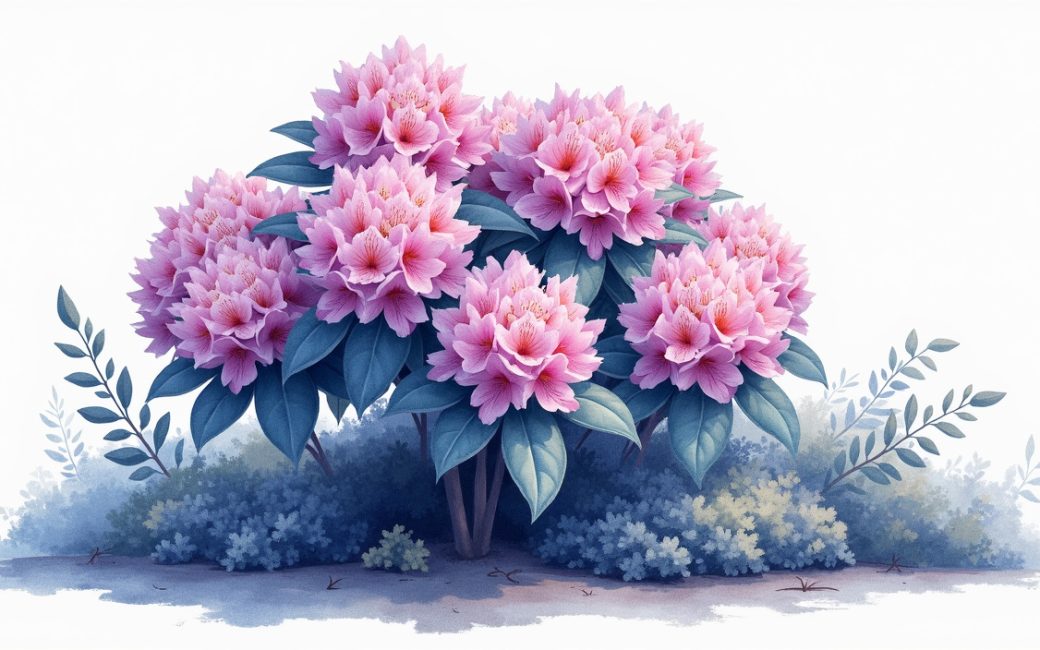
Site with heavy or waterlogged soil

Rhododendrons fail fastest in clay or compacted ground that holds water around the roots, and the mechanism is simple: the genus roots shallowly and fibrously rather than sending down a deep taproot, so those roots sit in whatever moisture the top layer of soil holds. When that layer stays saturated, the fine roots are starved of oxygen and become vulnerable to root rot pathogens that thrive in wet, poorly aerated soil, and the plant declines even though it looks like it's being watered enough. North Carolina State Extension notes that rhododendrons need well-drained, acidic soil and that they are particularly intolerant of wet feet, which is why a rhododendron planted at the low point of a yard, in unamended clay, or downhill from a foundation drain often declines within a season or two even when watered on the same schedule as healthier plants nearby.
The decline usually shows as a slow yellowing and thinning of the canopy rather than sudden collapse, and by the time the crown shows the dark, water-soaked discoloration associated with root rot, the damage is usually irreversible. Waterlogging is one of the clearest disqualifying conditions for a planting site, alongside alkaline soil — rhododendrons are ericaceous plants that need acidic conditions to take up iron and other nutrients — and any spot with heavy root competition from shallow-rooted shade trees that will out-compete a young rhododendron for both water and space. A north-facing foundation bed that collects runoff from a roofline, or the low corner of a lawn that stays soft into June, are both worth ruling out before a rhododendron ever goes in the ground, rather than discovering the problem after a full growing season of decline.
If the only available spot drains poorly, there are two workable fixes rather than one:
- Build a raised or mounded bed. Amending a raised bed with acidic, organic matter gives roots several inches of drainage above the native water table, rather than trying to fix the drainage of the native soil itself.
- Grow in a container with an acidic mix. A pot with drainage holes and an ericaceous, well-aerated potting mix removes the waterlogging risk entirely and lets the grower control moisture directly, which is a reasonable option for a small property or a site that simply has no better ground.
Either way, testing drainage before planting anything is worth the ten minutes it takes: dig a hole to planting depth, fill it with water, and see how long it takes to empty. A hole that's still full after several hours is telling you the native soil is not a rhododendron site without amendment. This same test is worth repeating a few feet away from the first attempt, since drainage in clay soils can vary sharply within a small area depending on compaction and grading.
Planted in full, hot sun

Rhododendrons planted in full, hot sun typically scorch along the leaf margins and the whole plant shows stress by midsummer, because the shallow root system can't pull water fast enough to keep pace with leaf transpiration in direct heat. This is different from the leaf curling and drooping rhododendrons show in cold winter weather, which is a normal water-conservation response to freezing temperatures and not a sign of drought stress. Confusing the two leads gardeners to either overwater a plant that's simply weathering a cold snap, or ignore a plant that's actually scorching in July sun.
Most rhododendrons are suited to filtered light or morning sun with afternoon shade rather than the open exposure a lawn shrub might tolerate; the Royal Horticultural Society lists partial shade as the general requirement across the genus, though the tolerance varies by cultivar and leaf size, with larger-leaved hybrids generally needing more protection from direct afternoon sun than smaller-leaved types. A west-facing wall, a south-facing slope with no tree canopy, or a spot exposed to constant wind is a poor match for most garden hybrids, particularly where winter sun on frozen ground can desiccate foliage that can't replace lost moisture through frozen roots.
Where full sun is unavoidable, dappled light under high tree canopy or the north and east sides of a building are the more forgiving choices. A planting under a high-limbed oak, where the canopy filters midday sun but doesn't block morning light entirely, tends to outperform the same cultivar set against a sunbaked south wall, even in the same yard. Once sited, mulching does two jobs at once: it holds moisture at the root zone so the shallow roots aren't drying out between waterings, and it moderates soil temperature swings that stress those same roots in both summer heat and winter freeze-thaw cycles. Mulch should sit a few inches deep and stay pulled back from direct contact with the stem, since bark held wet against the trunk invites rot at the base rather than protecting it.
Watering in the first two seasons after planting matters more than watering afterward, since an establishing rhododendron hasn't yet built the root spread it needs to buffer against a dry week on its own. Deep, infrequent watering that soaks the root zone does more good than frequent shallow watering that only wets the mulch surface, and a finger pushed a few inches into the soil is a more reliable check than the look of the top layer.
Animal or person ingests leaves, flowers or nectar-derived honey
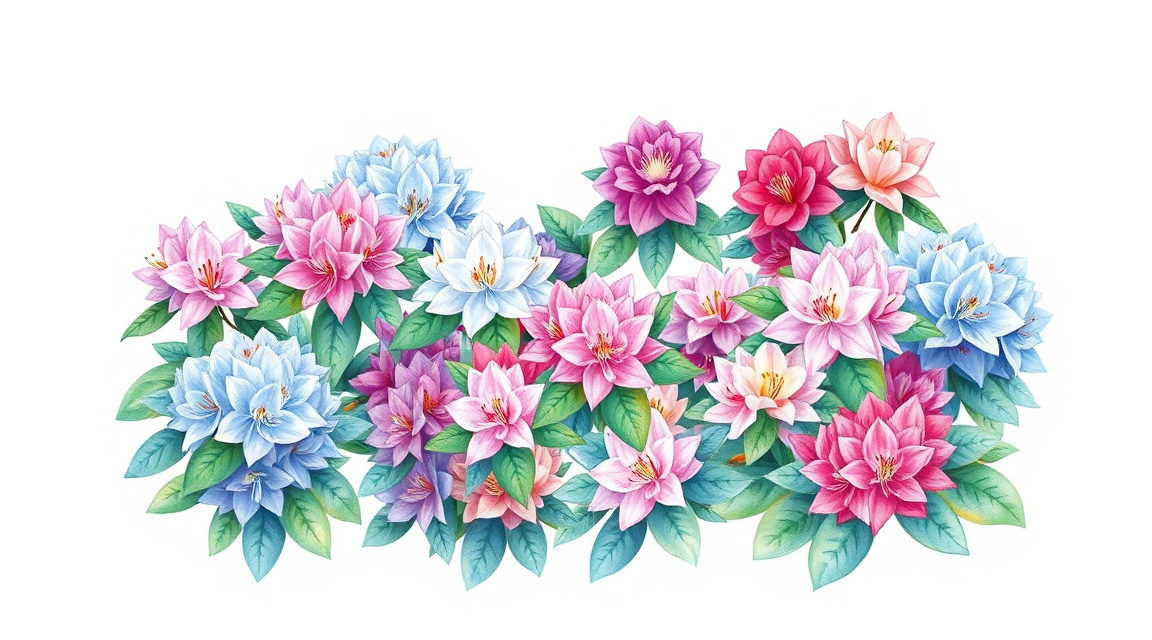
Yes — all parts of the rhododendron plant, including the leaves, flowers, and nectar, contain grayanotoxins, compounds that disrupt normal cell membrane function in the heart and nervous system when ingested in sufficient quantity. North Carolina State Extension's plant profile lists rhododendron as toxic to people and to animals including dogs, cats, and horses, and the same profile notes that this toxicity holds across the genus, which means azaleas carry the same risk, since azaleas are simply a horticultural grouping within Rhododendron rather than a separate, unrelated genus — a distinction that matters for anyone assuming a plant labeled "azalea" is a different, safer species. The Wikipedia entry on Rhododendron confirms that classification places azaleas within the same genus, and the toxic principle does not distinguish between the two horticultural names.
Grayanotoxin poisoning affects dogs, cats, horses, goats and other livestock, and the outcome depends on how much plant material was actually eaten relative to the animal's body size, not simply on whether contact occurred. Small nibbles on a leaf tip are a different situation from a goat or horse grazing a hedge down to bare stems, and any suspected ingestion of a meaningful quantity is worth a call to a veterinarian or an animal poison control line rather than a wait-and-see approach, since symptoms of grayanotoxin exposure — drooling, vomiting, weakness, abnormal heart rhythm — can escalate over hours rather than appearing immediately.
The same toxin is the reason unverified "rhododendron honey" carries risk for people: honey made from the nectar of grayanotoxin-containing rhododendron species has caused human poisoning historically, most often where bees forage heavily on a single toxic species and the honey isn't diluted by other nectar sources. This is a case where the plant's ornamental use and its toxic chemistry meet in a food product, and it's a reasonable question for anyone offered raw, unlabeled honey from a region with heavy rhododendron bloom, rather than something to dismiss as folklore.
Practical prevention comes down to siting and awareness rather than avoiding the plant altogether:
- Keep rhododendron and azalea plantings out of pastures, paddocks, and any area where livestock graze unsupervised.
- Fence or site plantings away from dog runs and areas where pets are left unattended if a household pet is known to chew on landscape plants.
- Don't consume rhododendron honey unless its source and dilution are verified, since there's no way to judge toxin content by taste or appearance.
- Rake and remove dropped flowers and leaf litter in areas frequented by grazing animals, since wilted or dried plant material doesn't lose its toxicity.
Choose type by hardiness zone and mature size
Choosing a rhododendron starts with hardiness zone and mature size, not flower color, because a plant that isn't bud-hardy in a given winter or that outgrows its site by several feet in a decade creates problems no amount of color choice fixes. A USDA hardiness zone rating is the starting point, but it doesn't account for local realities like a frost pocket in a low corner of a yard, snow cover that insulates roots in one winter and not the next, or a site exposed to intense February sun on ground that's still frozen — all of which can damage flower buds or foliage even in a zone the plant is nominally rated for. Two plants of the same cultivar, one in an open yard and one against a sheltered wall a few miles away, can come through the same winter with very different bud survival.
Flower color is real cultivar variation worth knowing once zone and size are settled — the genus spans white, pink, red, and purple bloom, often with contrasting throat markings on individual florets — but it is the last filter to apply, not the first, since a cultivar in the right color that isn't bud-hardy for the site will simply fail to bloom, or fail to survive, regardless of how the flower looks in a catalog photo.
Evergreen rhododendrons and deciduous azaleas fill different roles in a planting, and the choice is functional as much as aesthetic:
| Type | Foliage habit | Typical role | Mature size range |
|---|---|---|---|
| Large-leaf evergreen hybrids | Evergreen, holds structure year-round | Foundation planting, screening, winter structure | Ranges widely by cultivar; check tag for mature spread |
| Compact evergreen hybrids | Evergreen | Foundation planting in tighter spaces, low borders | Smaller mature width than large-leaf types |
| Deciduous azaleas | Loses leaves in fall | Mixed borders, seasonal color, understory drifts | Varies by cultivar |
| Evergreen (Kurume-type) azaleas | Evergreen, smaller leaves | Low hedging, foundation edges | Generally more compact than large-leaf rhododendrons |
Oregon State University's Landscape Plants program catalogs this range of habits and mature sizes across the genus, which is worth checking against a specific cultivar tag before planting, since "rhododendron" alone spans plants from low, spreading groundcovers to small trees. A tag that gives only a color and a vague "evergreen shrub" description without a mature width is not enough information to site the plant correctly against a foundation, a walkway, or a neighboring shrub.
Once sited and established, care follows the plant's own bloom cycle rather than the calendar:
- Let it flower first. Don't prune to shape or size before the plant has bloomed for the season.
- Prune immediately after petal fall. This is the window when next year's flower buds haven't yet formed, so cuts made now don't remove wood that would have bloomed next spring.
- Deadhead spent flower trusses by snapping them off above the new growth bud, being careful not to damage the growth just below the old flower.
- Hold off on later pruning. Cutting back in late summer or fall removes the buds the plant has already set for next spring — a mistake that shows up as a full, healthy-looking shrub with no flowers the following year.
- Feed lightly, if at all, right after bloom, matching any fertilizer application to the plant's post-flowering growth flush rather than to a fixed spring date.
A rhododendron pruned on this schedule blooms the following spring on the buds it set the previous summer, which is the entire logic behind avoiding a generic "prune in early spring" routine: by early spring, the buds that would have opened that year are already formed on the wood, and cutting them off is indistinguishable, to the plant, from a hard frost. The same logic applies to hedging cuts made on azaleas kept as low border plants — a shear job timed to a fixed calendar date rather than to petal fall is the single most common reason a mature planting stops flowering while otherwise looking healthy.
Match the cultivar to the site's actual winter exposure and available space before buying, then let the post-bloom pruning window do the annual shaping work — that's the sequence that keeps a rhododendron blooming reliably rather than fighting its own growth habit every year.