Soil pH is too high for rhododendrons
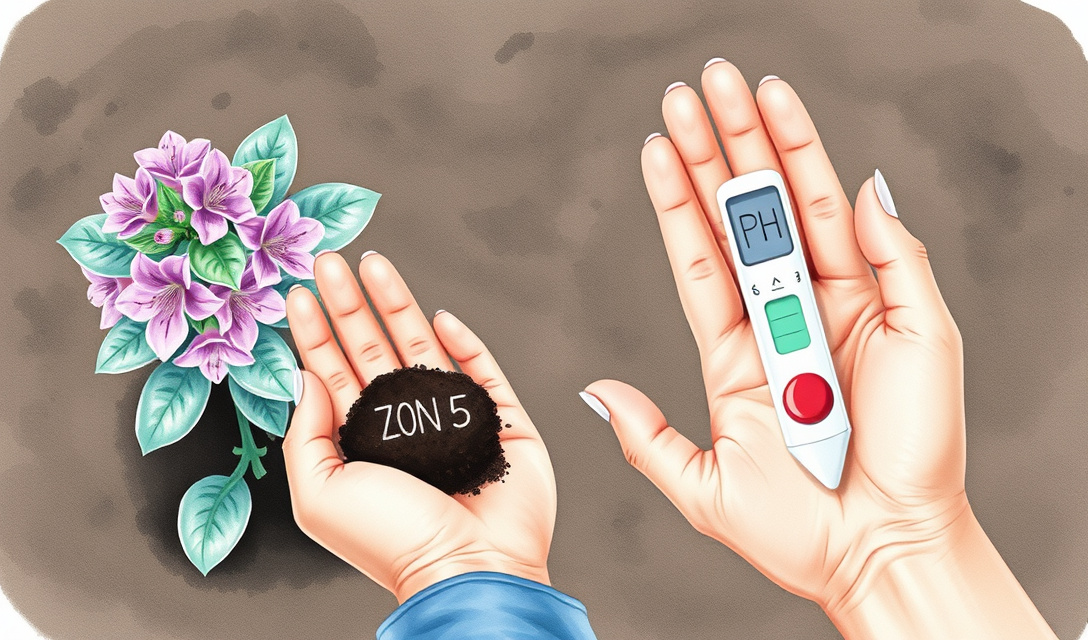
Zone 5 gardeners most often lose rhododendrons before the plant ever struggles with cold: the site's soil pH is too high. Rhododendrons need acidic soil, generally in the range that most native and hybrid types are bred for, and when pH drifts toward neutral or alkaline, the plant can no longer take up iron and manganese even if both are physically present in the soil.
The visible result is interveinal chlorosis — yellowing between the veins while the veins stay green — paired with stalled new growth, not the leaf browning that people usually associate with plant failure. This is a nutrient-lockout problem, not a fertility problem, so adding more fertilizer at this stage does nothing.
The fix starts before the shovel goes in the ground: test the soil pH. County extension offices and university soil labs will report a number, and rhododendrons want that number on the acidic side; the Royal Horticultural Society's growing guide and the American Rhododendron Society's regional chapters both point to acidic conditions as a baseline requirement for the genus, which includes azaleas (RHS, Midwest ARS).
If the test comes back too high, incorporate acidic organic matter — chopped oak leaves, pine bark fines, or peat — into the planting area well ahead of putting the shrub in, since pH shifts are gradual and won't happen in the same week as amendment. Where native soil is heavily alkaline and won't hold a lowered pH, the more reliable route is a raised bed or large container filled with an acidic mix, sidestepping the underlying soil chemistry entirely rather than fighting it season after season.
Heavy or poorly drained soil, or a root ball set too deep
A rhododendron planted in heavy clay or set too deep in the hole is a rhododendron planted to fail, regardless of how correct the pH is. Rhododendrons carry a shallow, fibrous root system that sits close to the surface by design, and that system suffocates quickly when it's sitting in standing water or buried under too much soil.
The symptoms overlap with drought stress, which is what makes this cause easy to misdiagnose: leaves wilt, brown at the margins, or drop, even though the bed is wet. Extension guidance from NC State recommends checking actual drainage before planting, not assuming it, because a hole that takes hours to drain after a rain will drown roots no matter what amendment goes into it (NC State Extension).
The corrective planting spec is straightforward and worth measuring rather than eyeballing: dig a hole wider than the root ball but no deeper than it, and set the root ball at or slightly above the surrounding grade — never below it. The New York Botanical Garden's planting guidance and the Rhododendron Species Botanical Garden both describe this "high and dry" placement as standard practice for the genus, since settling after planting will pull a slightly proud root ball down closer to grade over time anyway (NYBG, Rhododendron Species Botanical Garden). On sites where drainage can't be improved by grading or amendment, building a raised bed or berm 12 to 18 inches high with an organic-rich mix achieves the same result without regrading the whole yard.
Before backfilling, loosen a pot-bound root ball by hand, teasing apart circling roots at the outer edge so they grow outward into the new soil instead of continuing to spiral. Once planted, keep a mulch layer over the root zone and water regularly through the first two growing seasons, since shallow roots dry out faster than deep ones and can't be rescued by an established root system that isn't there yet.
Site is in full sun, deep shade, or under competing tree roots
A rhododendron that won't flower, or whose leaves look scorched or unnaturally sparse, is often planted in the wrong light — not the wrong soil. Rhododendrons in Zone 5 generally want filtered light or dappled shade, with protection from both harsh afternoon sun and the deep shade cast by a dense canopy; full, unbroken sun scorches leaves, while heavy shade suppresses bud set and produces a leggy, thin plant with few flowers.
Sites under large shallow-rooted trees compound the problem, since species like Norway maple compete directly with rhododendron roots for water and nutrients in the same soil horizon. Glendoick's growing guidance, drawn from decades of UK and international rhododendron cultivation, notes that a site with high or filtered light and shelter from wind produces stronger flowering and fewer leaf problems than either extreme of full sun or dense shade (Glendoick).
If an existing planting shows scorch on the sun side or thin, thready growth reaching for light, relocating it — rhododendrons transplant reasonably well given their shallow root system — to a spot with morning sun and afternoon shade, away from the root zone of large trees, resolves both problems at once. Maintain the mulch layer and supplemental water through dry spells even after relocation, since a newly moved plant is functionally a newly planted one for its first year regardless of size.
Azalea
Azaleas are not a separate genus from rhododendrons; they are a group within Rhododendron, and the planting requirements above apply to azaleas without modification. Soil acidity, shallow planting depth, drainage, and dappled light are the same constraints, whether the plant is labeled a Kurume hybrid azalea or a large-leaf rhododendron on a nursery tag (Glendoick).
The distinction that matters for a home gardener is mature size and bloom timing rather than genus, since azaleas tend to run smaller and finer-textured than many broadleaf rhododendrons, which affects spacing and how much shade a mature specimen will eventually cast on itself.
Mulch
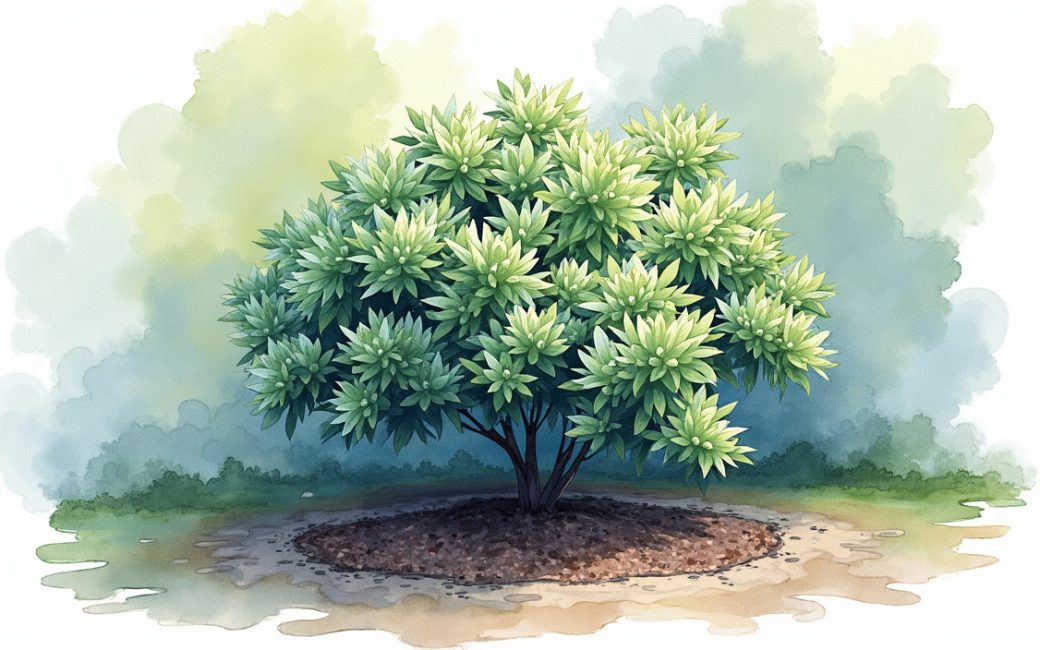
Mulch matters for rhododendrons because it directly protects the shallow root system the plant depends on. A 2- to 3-inch layer of an acidic organic material — shredded pine bark, pine needles, or oak leaf mold — keeps root-zone soil temperature more even, holds moisture during dry stretches, and slowly acidifies the soil as it breaks down.
Keep mulch pulled back a few inches from the stem itself; piling it against the trunk holds moisture against the bark and invites rot, undoing the benefit the mulch is meant to provide. Renew the layer as it thins rather than letting it compact down to bare soil, since a rhododendron's roots sit close enough to the surface that even a short gap in mulch coverage exposes them to temperature swings and drying wind.
Acidic soil
Acidic soil is the baseline condition rhododendrons need to take up the nutrients already present in the ground; without it, the plant can be perfectly watered and sited and still show deficiency symptoms. Rather than guessing, pull a soil sample from the planting site before committing to spring or fall planting, and compare the result against the acidic range recommended by the RHS and regional ARS chapters (RHS, Midwest ARS).
If the test confirms acidic soil already, minimal amendment is needed — mulch and organic matter maintain it over time. If not, decide now, before planting, whether to amend in place, build a raised acidic bed, or choose a different area of the property, since correcting pH after a rhododendron has been established for a season is far slower than getting the bed right first.